Decarbonization

The Salins Group is committed to the energy and carbon transition and aims to reduce its carbon footprint
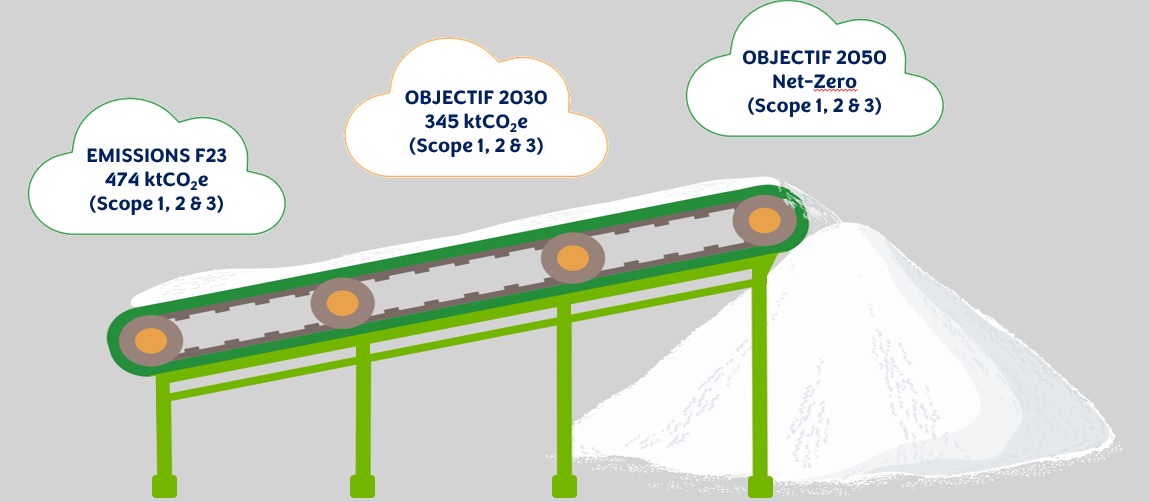
The strategic project, DGS30 (Salins Group Decarbonisation by 2030), aims to define a low-carbon pathway in line with the international ACT « Step-by-Step » methodology (Accelerate Climate Transition®) and then to implement it.
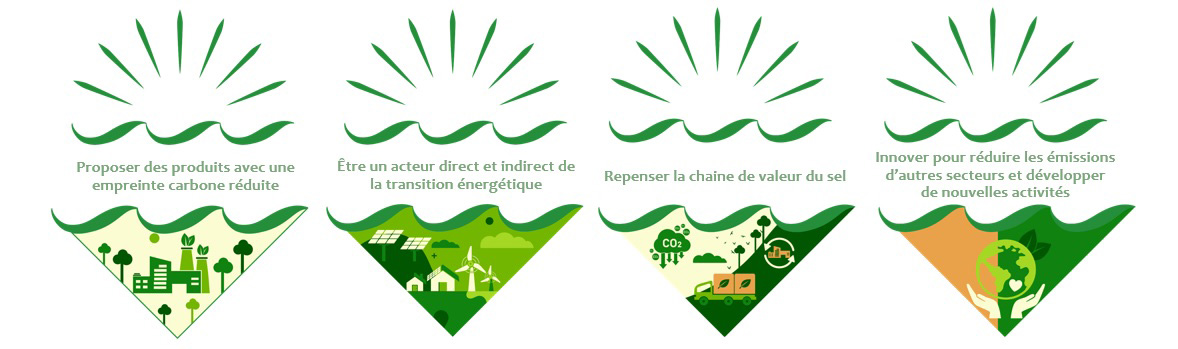
The Salins Group, a leading player and contributor to carbon neutrality as defined in the Paris Agreement:
Setting the 2030 targets
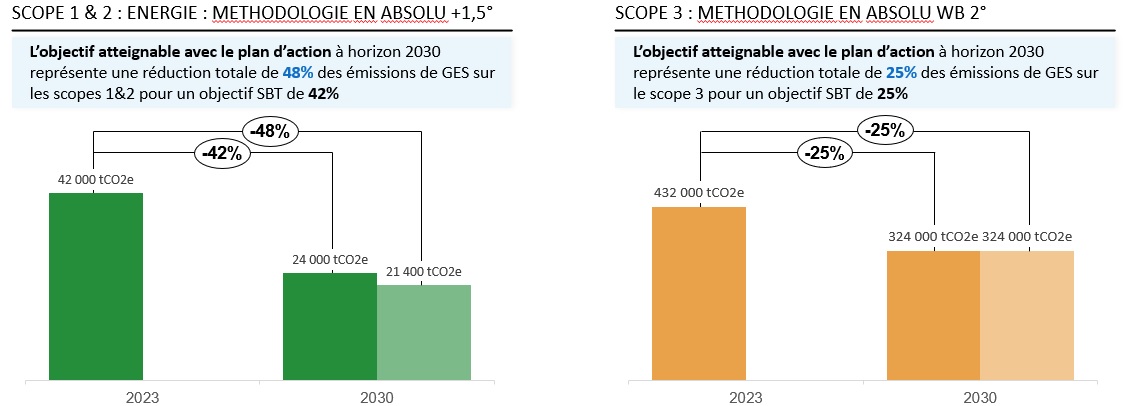
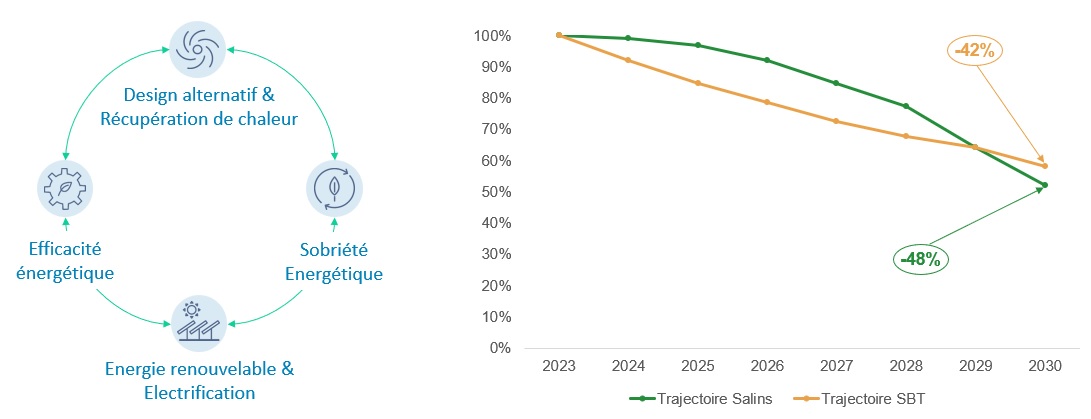
The Salins Group has used the guidelines of the Science Based Targets (SBT) initiative to set its greenhouse gas emission reduction targets in line with the objective of limiting global warming to below 2°C.
Scope 1 & 2: An action plan based on four key areas
The Salins Group has been working for several years to optimise its production processes and reduce its energy consumption. It has sought to step up its efforts by setting ambitious targets and structuring its approach around four key, complementary areas
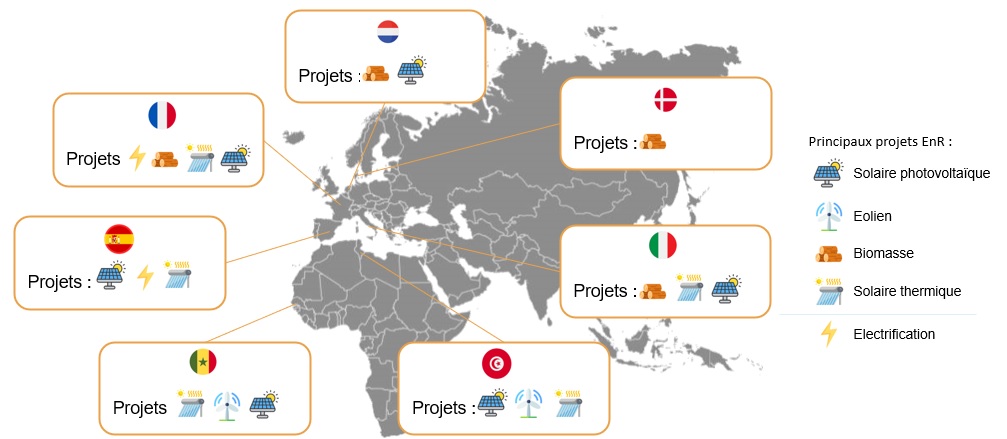
Scope 1 & 2: A Group-wide and multi-country approach
The Salins Group operates in numerous countries and has adopted a comprehensive approach, whilst taking into account the specific characteristics of each country in order to ensure a consistent trajectory.
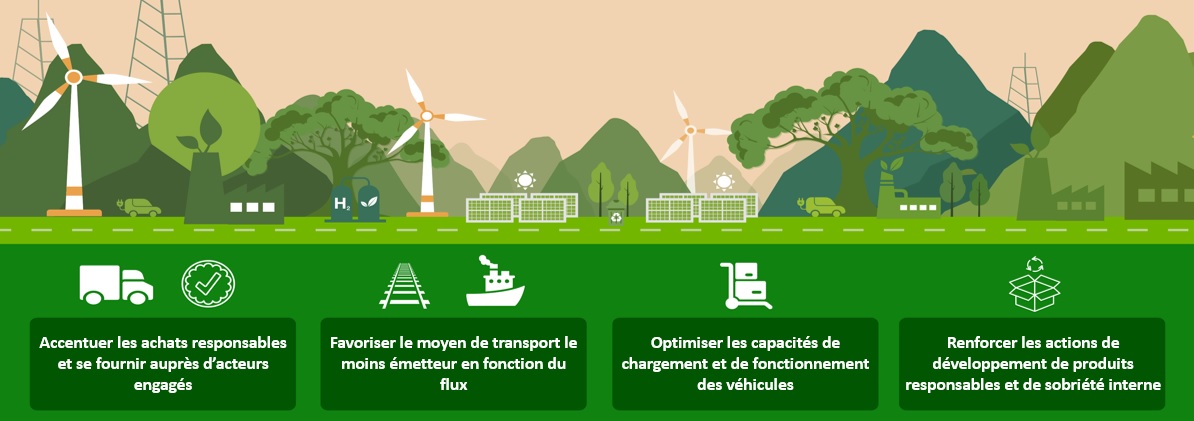
Scope 3: An action plan based on four key areas
The Salins Group has focused its efforts on the three main sources of Scope 3 emissions, which account for almost 90 per cent of its emissions: freight, inputs and packaging.
By adopting a low-carbon trajectory through its DGS30 project, the Salins Group is demonstrating a strong commitment to reducing its greenhouse gas emissions and transitioning towards a more sustainable future.
This initiative is fully in line with its CSR approach, through which the Salins Group affirms its role as a committed player, aware of current challenges, in order to meet the growing expectations of its stakeholders.